Cryptogenic Organizing Pneumonia (COP)
DIAGNOSIS
SYMPTOMS
- Productive cough2
- Progressive or mild dyspnea1
- Other common symptoms:1,2
- Anorexia
- Weight loss
- Sweats
- Chills
- Intermittent fever
- Myalgia
- Crackles may be localized or widespread throughout the lungs1,2
DIAGNOSTIC TESTS
Clinical history1
Infections/Drugs/Comorbid diseases
- Connective tissue disease (CTD)
- Thoracic radiotherapy for breast cancer
- Inflammatory bowel disease
- Cancer
- Exposure to drugs
- Aspiration
- Common variable immune deficiency (less common)
- Toxic exposures (less common)
Complete blood count (CBC)2
- Raised erythrocyte sedimentation rate
- Elevated C-reactive protein
- Peripheral blood neutrophilia
Pulmonary function tests2
- Lung volumes are normal in about 75% of patients
- Restrictive pattern (mild to moderate)
- Reduced DLCO
- Mild resting hypoxemia
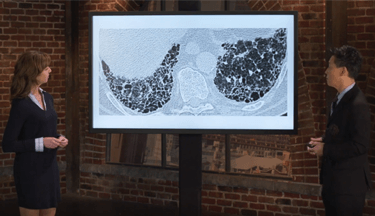
HRCT4
- Features: Airspace consolidation, mild bronchial dilatation, ground-glass opacities, large nodules are rare
- Distribution: Patchy, peripheral or peribronchial, basal predominance, sometimes sparing of subpleural space, migration tendency
Bronchoalveolar lavage2
- Increased number and proportion of lymphocytes
- Decreased ratio of CD4+ to CD8+ cells
- Increased number of neutrophils and eosinophils
Surgical lung biopsy is not always necessary1
- Only typical cases at imaging with compatible clinical and BAL features should be treated without biopsy1
- Patchy distribution of intraluminal organizing fibrosis in distal airspaces, preservation of lung architecture, uniform temporal appearance4
Chest X-ray
- Bilateral or unilateral areas of consolidation with patchy distribution2